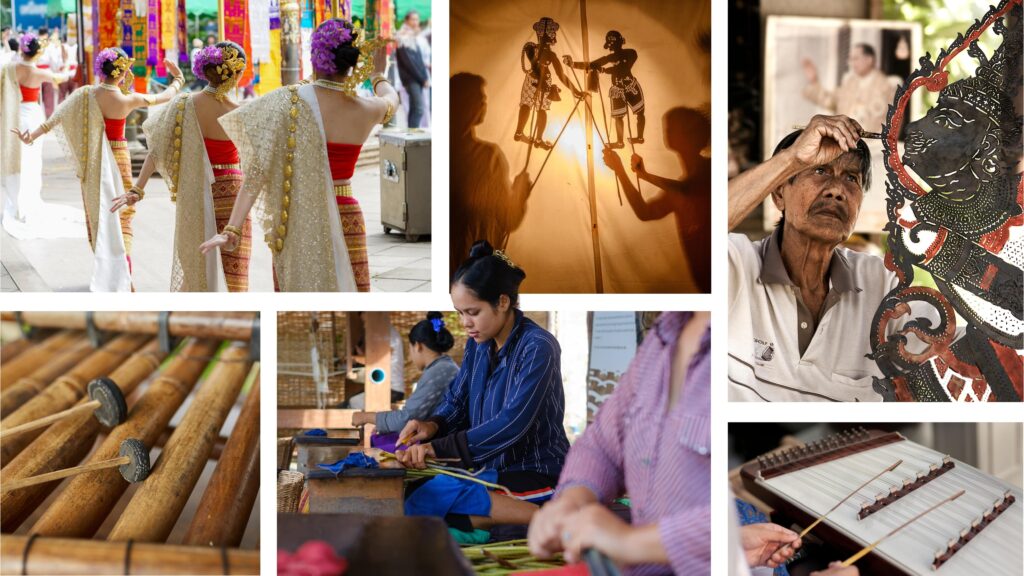
The creative industry is a significant driver of cultural tourism and economic growth in the Mekong countries. However, the COVID-19 pandemic has severely impacted this sector, with heritage sites experiencing a slower recovery, varying across countries with different economic development levels and recovery capacities. This downturn poses a risk to cultural skills and knowledge, as workers seek new opportunities, potentially leading to the loss of traditional heritage and the cultural foundations associated with key monuments. These monuments are vital to the region's unique cultural identity and tourism appeal. Furthermore, while micro, small, and medium-sized enterprises (MSMEs) are major economic contributors, the creative sector within them often lacks clear classification and tailored policy support, hindering their competitiveness. Weak intellectual property (IP) protection regimes in many Mekong countries further impede the growth of a thriving creative economy. Recognizing the crucial role of heritage and the challenges faced by the cultural and creative industries, the Mekong Institute is implementing the three-year ""Promoting Creative Industry for Heritage Tourism Development in the Mekong Region"" (Creative4Mekong) project. This initiative aims to bolster the resilience of the Lower Mekong Countries by strengthening creative industries, supporting cultural heritage conservation, and fostering\ tourism development for socio-economic recovery through digital platforms. The project focuses on selected World Heritage Sites in Siem Reap (Cambodia), Luang Prabang (Lao PDR), Bagan (Myanmar), Ayutthaya (Thailand), and Hue (Viet Nam), emphasizing multilateral and regional coordination to ensure the sector's sustainable growth.
To enhance the economic potential of the creative industries in the five Mekong countries by strengthening creative industries for cultural heritage conservation and tourism development at World Heritage Sites for socio-economic development.
Develop a business plan for the creative group association, summarizing key aspects such as legal information, business operations, results, and financial performance.
Adopt innovative methods to design and conduct training, covering topics such as business plan concepts, innovative profit models, cultural tourism, marketing, support services for association members, and sustainable development plans.
Conduct research on each Mekong River country to clarify the specific circumstances of intellectual property rights, such as copyrights, related rights, trademarks, geographical indications, and industrial designs in the creative industry. Identify problems and propose suggestions.
Develop a toolkit and conduct training on the core concepts and practical skills of creative tourism.
Develop artificial intelligence functions for the application platform.