Project Description
Plastic leakage in the Mekong region continues to threaten vulnerable communities, exacerbated by climate change and unmanaged waste practices. Despite global initiatives, regional responses remain fragmented, lacking standardized monitoring methods and coordinated action plans. Most interventions are isolated, leading to redundancy and inefficiency.
This project proposes a technical working arrangement focused on Science, Technology, and Information (STI) to develop harmonized, evidence-based solutions. Leveraging AIT’s experience in Thailand, Viet Nam, Lao PDR, and Cambodia, the initiative will identify key gaps in existing systems and foster collaboration among stakeholders. With an emphasis on detection, mitigation, and prevention, the project aims to build replicable models and enhance local capacity in alignment with global plastic pollution policies.
Our Core Objectives
1
The key objectives are structured under three thematic areas:
Plastic Leakage Prevention
2
Plastic Waste Detection and Monitoring
Results Achieved
-
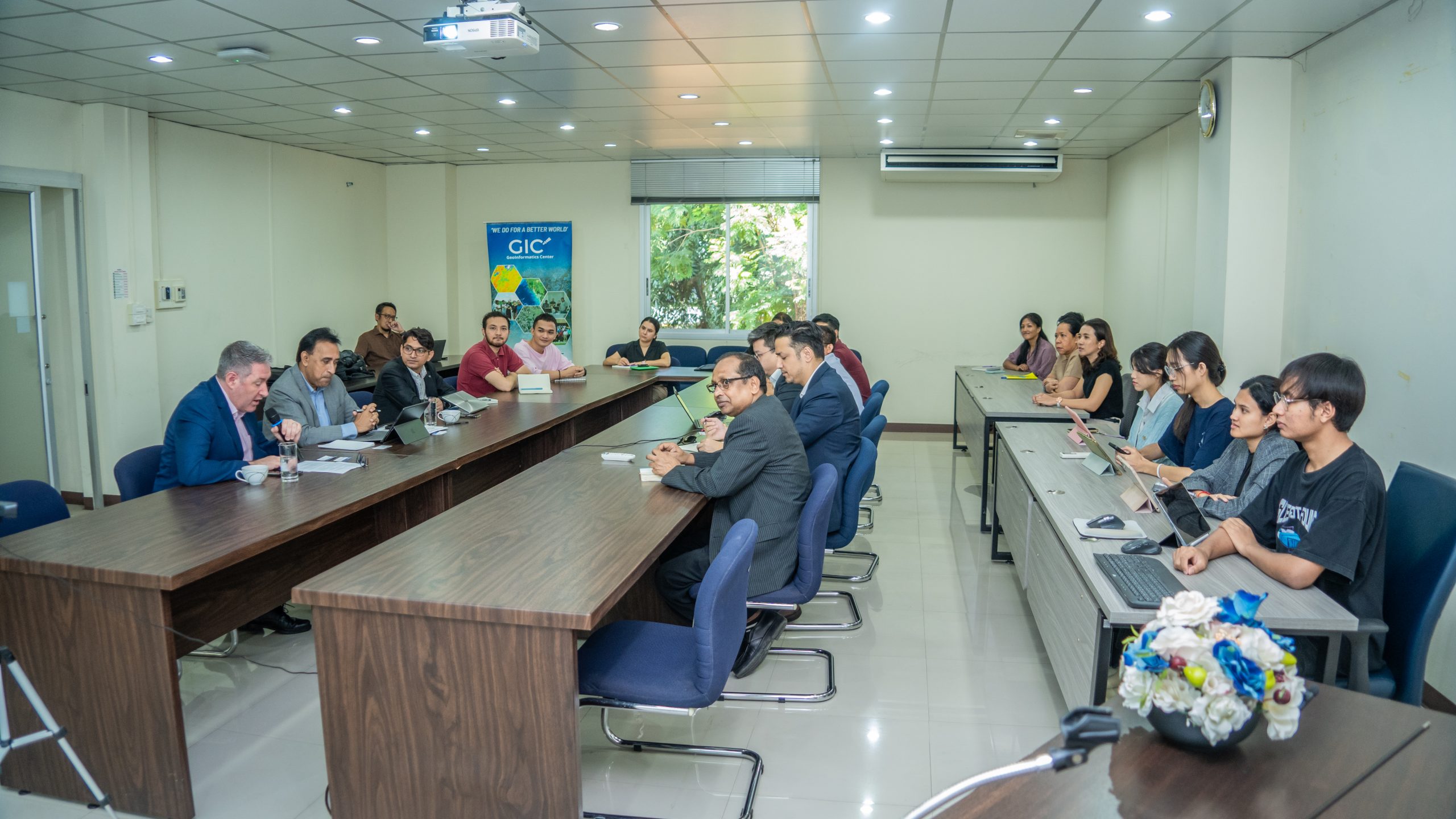
Trained over 100 participants on pLitter AI-CCTV, the mobile app, and plastic leakage mapping.
-
Installed 10 new AI-CCTV cameras across Thailand (2), Cambodia (2), Viet Nam (2), and Lao PDR (4).
-
Updated the mobile app to support four additional local languages—Thai, Khmer, Vietnamese, and Lao —for improved usability.
-
Compiled a comprehensive report on existing policies, tools, and technologies for monitoring plastic waste in the Mekong region.
-
Developed a dashboard to record and analyze plastic waste data.
-
Showcased the project at various international and national platforms, including four international events (GPIP, KOMEC-Korea, KOMEC-Lao PDR) and six national events (Mahidol, TH workshop, SOS2024, Chula workshops, KOMEC-Thailand).
-
Thailand:
A monthly community recycling market was established.
-
175 households (14% of the target area) participated in training activities on waste and environmental management.
-
157 youth took part in the children's zero-waste camp, collectively helping to collect over 139 kilograms of residual waste in the community.
-
120 households (10%) joined the community recycling market, resulting in the collection of 13.7 tons of recyclable materials.
-
39 households (3.1%) engaged in home composting, reducing organic waste by an estimated 20 kilograms per household per month.
-
Six types of environmental awareness signboards were installed across the community to promote sustainable waste practices.
-
Vietnam:
Signed an MoU with a local school in Can Tho, engaging over 500 students, 43 teachers, and 20 representatives from local authorities, universities, and organizations.
-
Created 14 educational murals around the school yard to promote youth awareness of environmental issues.
-
Trained 110 students and 43 teachers on zero-waste principles.
-
Organized a ‘Zero-Waste Day’ event with 600 participants, including students and parents.
-
Collected 1,027 kg of plastic waste from the litter trap installed in the river.