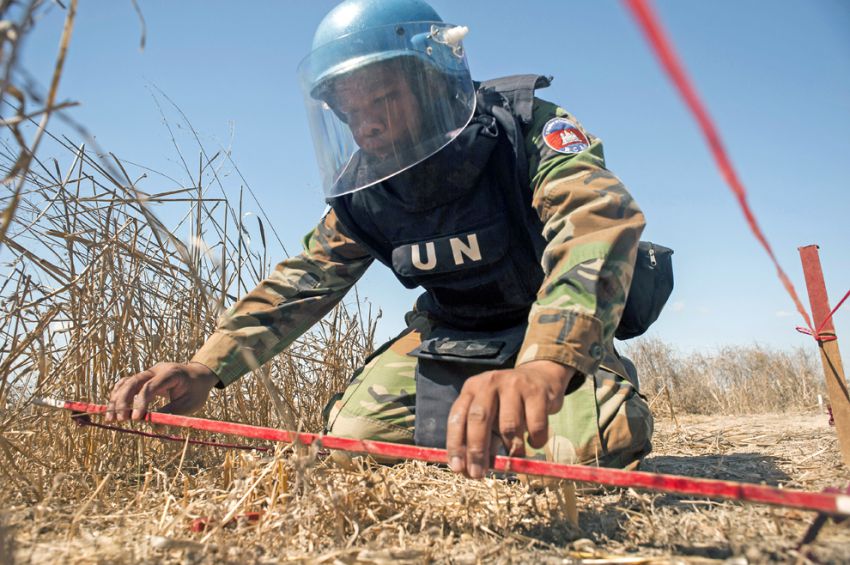
The CPGFM project promotes climate-resilient and environmentally sustainable mine action (MA) in the Mekong region, where explosive ordnance (EO) contamination and climate risks intersect. EO contamination continues to threaten safety and hinder land use, while climate change intensifies risks by increasing the frequency of floods and erosion that can displace unexploded ordnance (UXO). Demining activities themselves may also cause environmental damage and GHG emissions if not carefully managed. To address these challenges, the project set three core outputs and key activities as follows: 1. An integrated risk vulnerability assessment of the interlinkages between mine action and climate/environment is conducted : A baseline study will be conducted in three highly affected areas of the three countries of Vietnam (Quang Ngai, Binh Dinh, Thua Thien Hue), Lao PDR (Bolikhamxay province), and Cambodia (Battambang Province) how EO contamination and climate/environmental risks—such as floods, erosion, and temperature rise—interact. The study will also measure GHG emissions from demining activities and recommend climate-smart MA strategies. 2. Guidelines for Vietnam’s National Mine Action-Environmental Standard are developed and supported by the evidence of the small-scale adaptation and mitigation pilot tests : Field-based pilot tests will be carried out, including the creation of integrated EO–climate risk maps and the application of climate- and environment-risk adaptive measures in demining operations, including the use of low-emission equipment. Lessons from these pilots will inform the drafting and stakeholder validation of Vietnam’s first National MA Environmental Standards. 3. Regional knowledge sharing and partnership building is promoted : A Mekong–ROK Conference and technical workshops will disseminate findings and good practices, while ASEAN Regional Mine Action Center (ARMAC)’s regional information dashboard will be pilot-tested to enhance cross-country data and policy collaboration. Through these intervention, the project aims to achieve the following Outcome: Climate-resilient and environmentally sustainable MA practices are introduced, and the capacity of key MA stakeholders in the Mekong region is strengthened. Ultimately, the project contributes to a safer, greener, and more resilient Mekong region, supporting SDGs 13 and 16, and indirectly contributing to SDGs 1, 2, and 8. The trilateral partnership of KDS, UNDP Vietnam, and ARMAC exemplifies a best-fit model for effective ROK–Mekong cooperation.