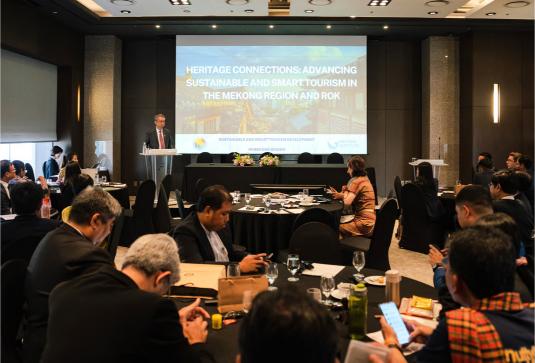
Tourism benefits the poor through employment opportunities. Tourism offers labour-intensive and small-scale opportunities compared with other non-agricultural activities, employing semi-skilled and casual workers, small and medium-sized enterprises, a high proportion of women, and providing an opportunity for self-employment. Tourism also provides opportunities in remote areas and in places with a high value on natural resources and culture, all of which tend to favor the poor. Local young leaders raised in poor living environments have been given little access to education and opportunities to engage in business. Countries in the Mekong region are working together to promote the subregion as a single destination for international visitors and encourage communities to enhance the environmental, social, and economic benefits of tourism.
Enhance the capacities of tourism-related organizations representing the government, the private sector, and academe in the promotion and practice of sustainable tourism
Widespread application by Mekong countries of smart tourism and the “sharing economy” concept to maximize the potentials of human capital and enhance innovation and the efficient use of endogenous cultural and natural resources
Training and guidance of the Mekong River Hotel in South Korea. The goal is to enhance the quality of tourism services. This is achieved by developing training courses, holding roadshows to recruit trainees, and providing electronic guidance materials.
Pairing of historical and cultural towns, aiming to promote regional cooperation. Through conducting scoping studies, organizing learning visits, signing cooperation memorandums and holding investment forums, it promotes the exchange of sustainable tourism solutions and public-private cooperation.
Support the development of smart tourism along the Mekong River, focusing on technological application, and promote the application of ICT technology in tourism by developing online and offline platforms, providing relevant training and holding workshops.
By forming working groups, conducting baseline studies, mid- term and final evaluations, this component ensures that the project proceeds as planned and assess its effects, and promote tourism development in the Mekong River region from multiple dimensions.