As of May 2015, Myanmar's electricity infrastructure met only half of the national demand, leaving around 70% of the largely rural population without access to the national grid. This energy gap has contributed to significantly lower living standards in rural areas compared to urban centers. Energy supply and efficiency challenges are common across the CLMV countries. This project promotes regional collaboration by developing adaptable training materials and program designs that can be applied in future academic or development initiatives, thereby supporting knowledge sharing and improved energy access across the Mekong region.
To develop a curriculum and training materials, including two sets of micro-scale horizontal axis wind turbines, measuring instruments, and training aids such as computer programs for wind turbine design, and to conduct research on wind energy and its implementation technologies suitable for Myanmar's context.
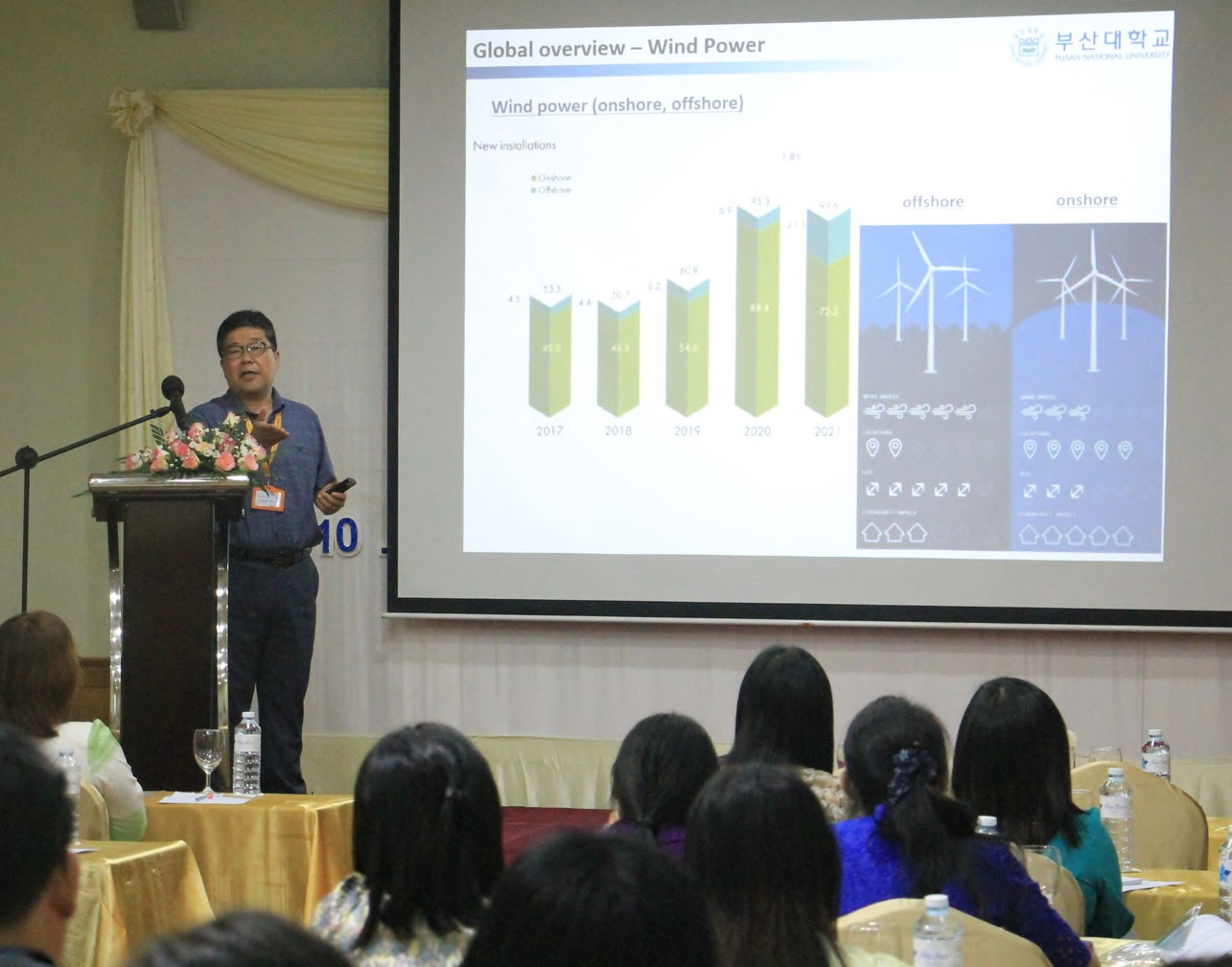
To provide training for approximately 40 government officials from relevant departments, as well as private sector participants working in wind energy-related fields in Myanmar, utilizing the research outputs from the first objective.
To facilitate academic and technological exchange between Yangon Technological University and Ho Chi Minh City University of Technology, under the supervision of a partner university from the Republic of Korea (ROK).
To share common issues, challenges, and lessons learned in the promotion of wind energy, and to identify potential regional collaboration strategies for the broader application of wind energy in rural electrification and green growth.
Capacity Building for Energy Personnel: Conducted training sessions at Yangon Technological University (YTU) in collaboration with Ho Chi Minh City University of Technology (HCMUT), Viet Nam, and a partner university from the Republic of Korea (ROK).
Curriculum Development on Wind Energy: Conducted literature reviews and field research to support curriculum design.
Laboratory-Scale Wind Turbines: Carried out experimental testing and incorporated results into practical training modules.
Regional Collaboration and Knowledge Sharing: Facilitated the exchange of findings and experiences between Myanmar and Viet Nam to promote regional learning.